To understand note values, it helps to measure musical time with a simple, steady unit. For a broader reference, see this Wikipedia overview. At the very beginning, you can imagine that one beat lasts one second, although in real music the beat may be faster or slower depending on the tempo. Notes are written with different shapes so that a musician can see how long each one should sound. There are only a few basic note-value symbols to learn first, and each of them has its own name.

Basic Note Values

1. Whole note. On the staff, a whole note is written as an open oval notehead. If we use one second as our practice beat, a whole note lasts for four beats. You can count the time silently, tap your foot, or use a metronome. A metronome is especially useful at first because it keeps the beat steady for you. Hold the whole note through the full count: one, two, three, four.

2. Half note. A half note sounds for half as long as a whole note. In our simple counting example, that means two beats: one, two. So one whole note has the same total duration as two half notes. On the staff, a half note looks like an open notehead with a vertical stem. Whether the stem points up or down does not change how the note is played; it is mainly a matter of clear notation.

3. Quarter note. A quarter note is half the length of a half note and one quarter of a whole note. With our practice beat, it lasts one count. The four-count duration of a whole note can therefore be filled by four quarter notes. In notation, a quarter note is written as a filled-in notehead with a stem.

4. Eighth note. An eighth note is half as long as a quarter note. In the same counting system, one eighth note lasts half a beat, so two eighth notes fit into one beat. A whole note contains eight eighth notes. Eighth notes look like quarter notes, but with one flag added to the stem.
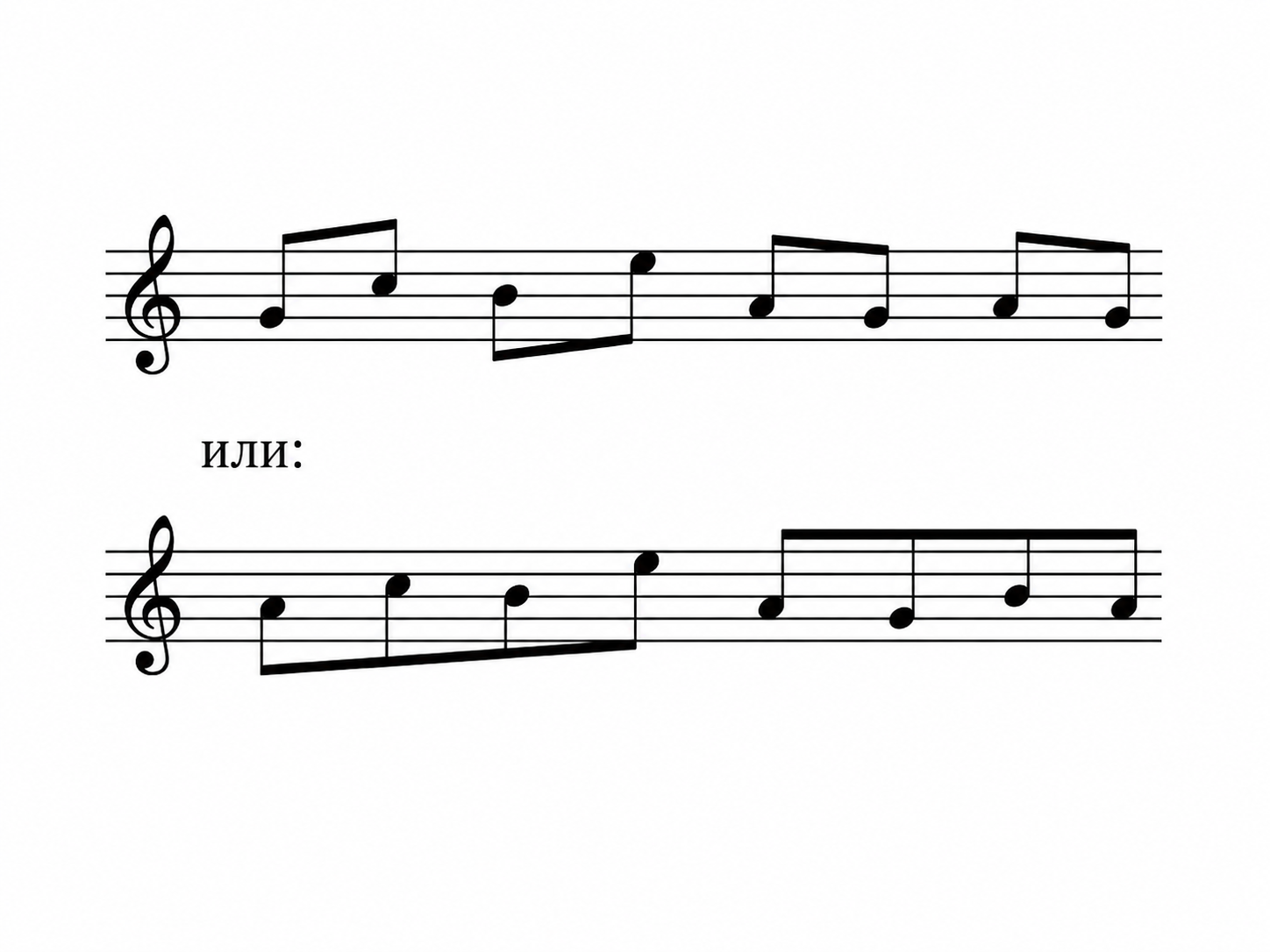
When several eighth notes appear next to each other, their flags are often replaced by beams: horizontal lines that connect the stems. The rhythm is the same; the beaming simply makes the notation easier to read.
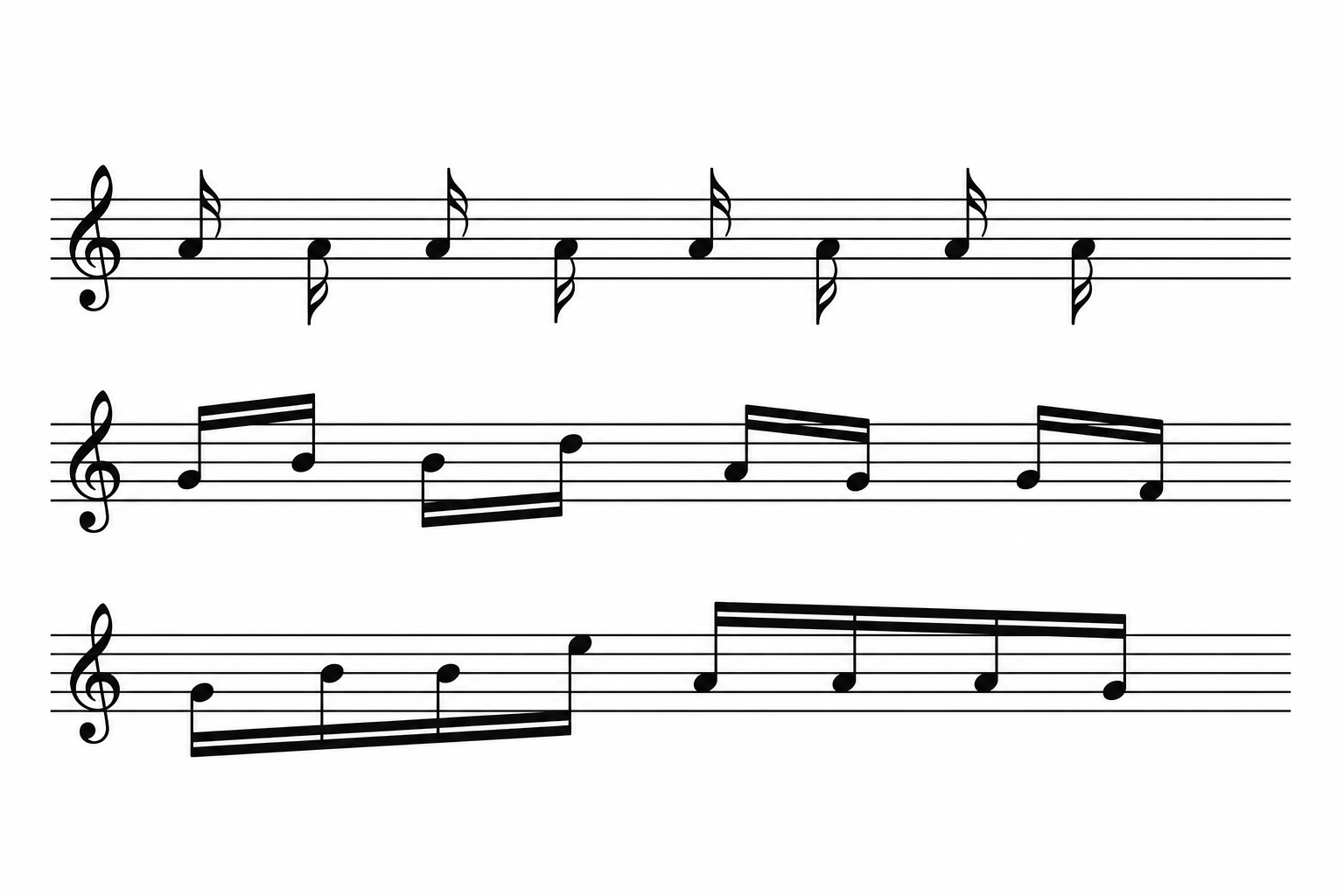
5. Sixteenth note. A sixteenth note is half as long as an eighth note and four times shorter than a quarter note. That means four sixteenth notes fit into one beat, and sixteen sixteenth notes fit into the duration of one whole note. A sixteenth note is written like an eighth note, but with two flags instead of one. Like eighth notes, sixteenth notes can also be grouped with beams; in that case, two horizontal beams connect the stems.
Shorter values, such as thirty-second and sixty-fourth notes, are used much less often in beginner music. They are written in the same basic way, but with three or four flags on the stem, or with three or four beams when the notes are grouped.

Notes written one after another on the staff are played in sequence.
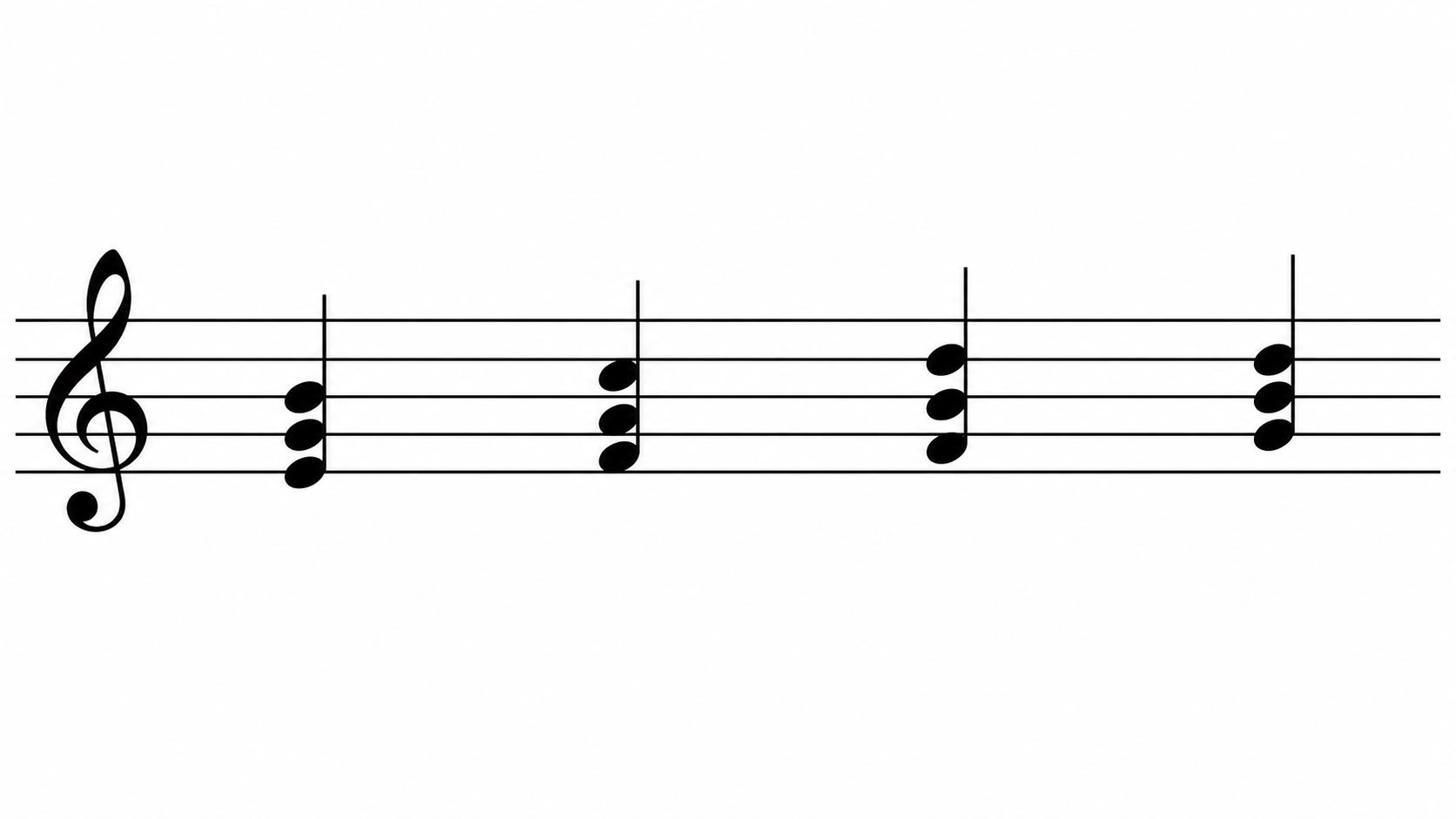
Notes written vertically, one above another, are played at the same time.
After learning these note values, you can practise basic durations with simple reading exercises, drum books, and drum video lessons.